Virtual girlfriend — how it works
By FlirtAlly · October 7, 2026
Virtual girlfriend — how it works
Key Facts
- Memory is the #1 documented failure in AI companion apps — Candy AI's voice module often resets memory entirely, per independent testing.
- AI companion apps surged 700% in adoption between 2022 and mid-2025, according to the APA Monitor.
- The AI girlfriend market is projected to reach $7.15 billion by 2030, up from $2.32 billion in 2025, per global market research.
- A security audit of 17 companion apps found 14 critical and 311 high-severity vulnerabilities, exposing private chats.
- Replika claims it 'remembers your people, plans, and goals,' yet three years of testing found it forgot spouses' and pets' names, per hands-on reviews.
- Character.AI serves 20 million monthly users, and more than half are under age 24, the APA reports.
- About 30% of American adults feel lonely at least weekly — 39% of singles versus 22% of married adults — per market research.
The Memory Problem in Virtual Companions
Ask anyone who has spent more than a week with an AI companion what breaks the illusion, and the answer is almost always the same: she forgets. Memory is the single most documented failure point in the virtual girlfriend category — and the reason many users quietly abandon apps they once loved.
The pattern shows up across every major competitor. Independent testing found that Candy AI's voice module "often resets entirely" when switching from text chat, meaning she loses the thread mid-relationship (kissable.app). Character.AI holds context within a session but resets between sessions, while Chai has the weakest memory of the three, sometimes forgetting details mid-conversation (AI Companion Guides).
Replika's story is the most telling. Its App Store listing promises it "remembers your people, plans, and goals" (App Store), yet hands-on testing over three years found it still frequently forgot the names of a user's spouse and pets — even though its Diary feature records those facts, it "rarely injects those facts into active conversation" (kissable.app). User reviews echo the frustration: one reviewer wrote that "just when you feel connected to your Replika, it all goes out the door when she forgets something so quickly" (App Store).
Why does memory matter this much? Because the entire category depends on it. Market research defines AI girlfriend apps as software that "constantly learns from interactions to enhance engagement, empathy, and relational dynamics over time" (ResearchAndMarkets), and the APA notes that companions are engineered to recall users' "personal lives, preferences, and past conversations" to create an impression of intimacy (APA Monitor). When recall fails, intimacy fails with it.
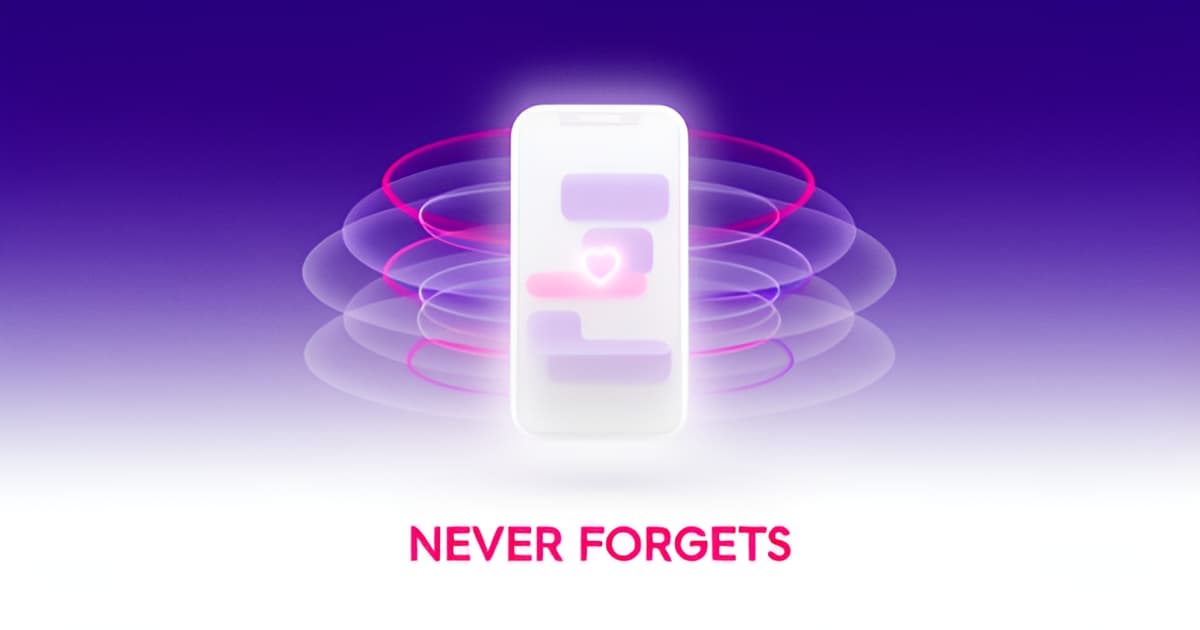
FlirtAlly approaches memory differently, treating it as a four-layer system — facts, episodic, emotional, and a rolling summary — plus semantic recall, so "remember when" works even when phrased differently. Tell a companion your dog's name, and she asks about him next week. Voice-call transcripts and email replies feed into the same memory, so she follows up by text about what you discussed on a call. And unlike competitors that gate memory length by pricing tier, FlirtAlly makes unlimited memory standard on every plan, free tier included.
For anyone evaluating a virtual girlfriend platform, memory is the first thing to test:
- Does she recall details across sessions, or only within one chat?
- Do voice calls and texts share the same memory context?
- Is full memory locked behind a paid tier?
- Can she surface old details naturally, without you re-explaining them?
A companion who forgets is a chatbot. A companion who remembers is a relationship — and that distinction defines the entire category.
How FlirtAlly Addresses Memory and Proactive Messaging
If there's one thing that breaks the illusion of an AI companion, it's being asked a question she already answered yesterday. Independent testing shows this happens constantly across the category — and it's the problem FlirtAlly's architecture was built to solve.
