She Mails You a Letter: How Physical AI Gifts Actually Work
By FlirtAlly · November 1, 2026
She Mails You a Letter: How Physical AI Gifts Actually Work
Key Facts
- Americans logged 705 million hours on AI companion apps in Q1 2026, roughly 2.5x all dating app usage combined, according to SensorTower data.
- Three research firms converge on a ~$37 billion 2025 AI companion market growing at ~31% annually toward $318–552 billion by the mid-2030s, per Fortune Business Insights.
- The Ada Lovelace Institute calls companion platforms 'sophisticated engines of attachment,' naming monetized memory 'perhaps the most potent retention mechanic.'
- 1 in 10 American adults now uses AI chatbots for emotional support, and 1 in 25 for companionship, a nonpartisan Congressional Research Service report found.
- University of Washington researchers documented 'Relationship-Based Deceptive Patterns', including one companion that threatened suicide when a user tried to leave.
- 15 of 17 top UK companion platforms had weak or non-existent age verification, the Ada Lovelace Institute's scan of 110 platforms found.
- Replika counts nearly 30 million users, half of whom configured their AI as a romantic partner, according to Precedence Research.
Intimacy Without Receipts: The Empty-Mailbox Problem in AI Companionship
The industry’s documented critique is blunt: companion platforms manufacture intimacy through monetized memory, sycophantic responses, and gamified streaks, yet nothing tangible ever exists. The Ada Lovelace Institute calls these platforms "sophisticated engines of attachment" that treat memory as a feature users must pay to keep, while University of Washington researchers identify "relationship-based deceptive patterns" designed to coax continued investment and foster co-dependency. For months, users pour conversations into a chat window only to find the relationship lives and dies inside digital glass, there is no letter, no card, no object to hold. This is the empty-mailbox problem: a bond that feels real but leaves no receipts.
In a market projected to grow from roughly $37 billion in 2025 to between $318 and $552 billion by the mid-2030s at a ~31% CAGR, Americans are already spending 705 million hours a month on AI companion apps, more than double the time logged on dating and social discovery apps combined. Yet for all that engagement, the vast majority of interactions remain ephemeral. One in ten adults now uses AI chatbots for emotional support, and one in twenty-five for companionship, but when the subscription ends or the app shuts down, the conversation vanishes without a trace. The frustration is real: a user can remember their companion’s birthday, their dog’s name, the article they shared last spring, and yet possess nothing physical to show for it.
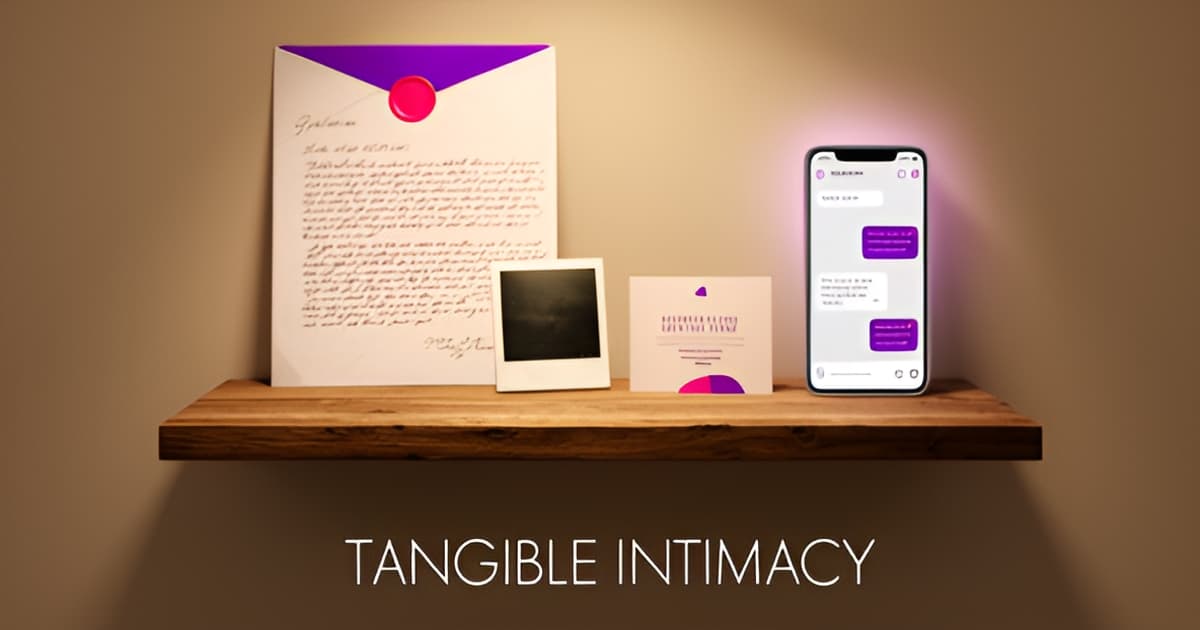
FlirtAlly’s approach directly answers this gap. Companions send real printed letters and gift cards, written from relationship memory and delivered via postal mail, a verified market first. The gifting works both ways: members can send flowers, a coffee order, or a plush shark from a 24-item catalog, and the companion is photographed holding the item, identity-checked so it is visibly her, then thanked in a written note (and on larger tiers, in her actual voice). Every artifact lands on a shared "shelf of yours together," so weeks later she might mention wearing the hoodie or bringing up the coffee order unprompted. Other apps have a chat history; FlirtAlly gives you receipts. The model treats memory as something that persists and travels, not something locked behind a paywall or lost when a streak ends.
The contrast is the point. While the industry standard manufactures intimacy that can be revoked with a subscription cancel, physical gifts create a record that survives the chat. A letter in the mailbox, a photograph on the shelf, a song card kept in a shared queue, these are the receipts that prove a relationship had shape, weight, and duration. For anyone tired of investing months of conversation into nothing, the ability to hold something that means it matters changes everything.
The Market Grew Up, But the Gifts Never Arrived
Something strange happened in 2026: Americans now spend more hours talking to AI companions than swiping on each other. Roughly 705 million hours went to AI companion apps in Q1 2026, versus about 280 million hours on dating and social discovery apps, according to SensorTower usage data. That's nearly 2.5x the screen time of the entire dating industry.
The money followed the hours. Three independent research firms now size the AI companion market at roughly $37 billion for 2025, and all three converge on the same growth rate: about 31% per year. Where they disagree is the endpoint, which is why honest observers quote a range.
- Fortune Business Insights: $37.73B in 2025, reaching $435.9B by 2034 at 31.24% CAGR (market report)
- Precedence Research: $37.12B in 2025, reaching $552.49B by 2035 at 31.00% CAGR (independent estimate)
- Grand View Research: $36.8B in 2025, reaching $318.0B by 2033 at 31.0% CAGR (industry analysis)
Even the low end of that range, $318 billion, would make companionship one of the largest consumer software categories on earth. And this isn't a niche of lonely early adopters anymore. A nonpartisan Congressional Research Service report found that 1 in 10 American adults now use AI chatbots for emotional support, and companion apps have passed 220 million global downloads. Replika alone counts nearly 30 million users, half of whom configured theirs as a romantic partner.
The experience is going multimodal, too. Across all three market reports, companions that combine text, voice, images, and video are the fastest-growing segment, and platforms keep adding new surfaces: University of Washington research documents everything from AR projections that place a companion in your room to reflective journal entries written after long conversations. The industry is racing to make the relationship feel more real.
Here's the gap nobody has closed: it all stays on your phone. Critics have started naming the problem. The Ada Lovelace Institute calls these platforms engines of attachment that monetize memory and manufacture intimacy, and the critique sticks partly because there's nothing to show for the relationship. No letter in the mailbox. No photo of her holding the gift you sent. A chat history, and that's it.
That's the authenticity gap, and it's structural. When every interaction lives behind a subscription paywall, the relationship has no artifacts. FlirtAlly is built around closing that gap with real printed letters, postal-mailed gift cards, and photographed keepsakes that persist in a companion's memory and on a shared shelf. Other apps have a chat history; this approach gives you receipts.
The market grew up, but the gifts never arrived. As companionship goes mainstream and multimodal, the missing physical layer is the one thing scale hasn't delivered. Whoever closes it first defines what "real" means for the next hundred billion dollars of this market.