R my girlfriend is AI — how it works
By FlirtAlly · October 7, 2026
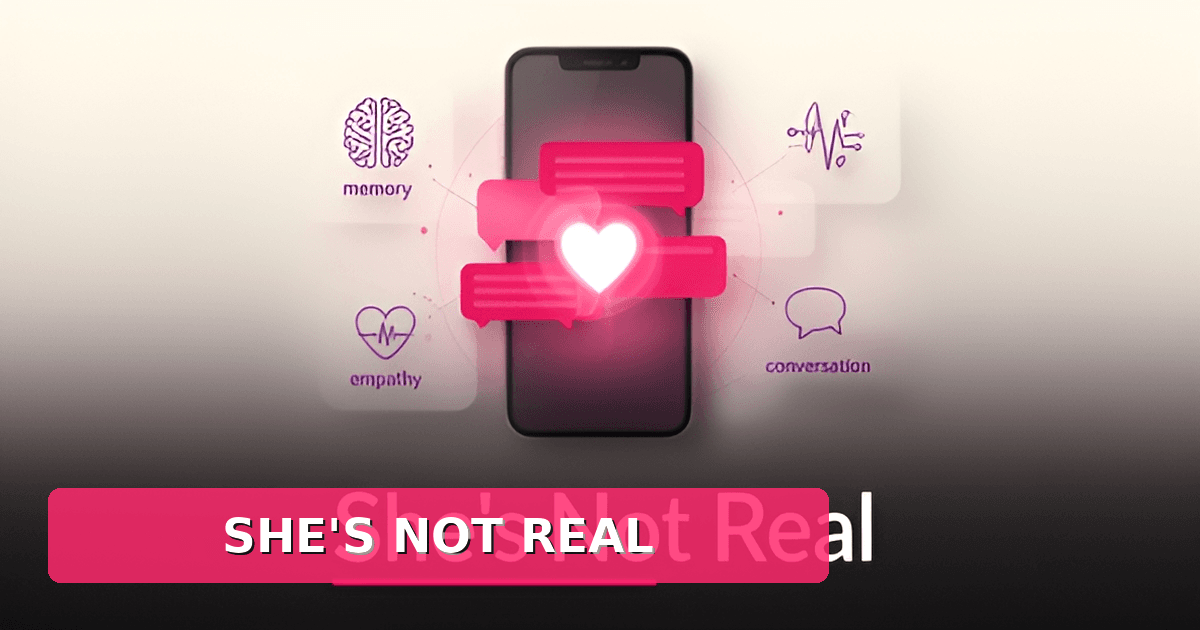
R my girlfriend is AI — how it works
Key Facts
- Search interest for 'AI Girlfriend' surged 525% in a single year, hitting 1.6 million annual English-language searches, according to market analysis.
- Mental Health Support is the largest AI girlfriend market segment, holding 41.40% of application revenue in 2025, per SNS Insider's industry report.
- A Stanford study found 80% of companion chat sessions involved seeking emotional or social support, not entertainment.
- 45% of users report emotional attachment to AI companions within three weeks, according to SNS Insider.
- 67% of AI companion users engage with their virtual partners daily, Market.us research shows.
- The AI girlfriend app market is projected to grow from USD 3.08 billion in 2025 to USD 19.09 billion by 2035, per industry projections.
- Stanford researchers warn engagement-optimized AI companionship acts like 'social junk food' that can worsen loneliness for vulnerable users.
The Emotional Void That AI Companions Fill
Loneliness has quietly become one of the defining conditions of modern life — and millions of people are now turning to AI girlfriends not for novelty, but for someone to talk to. Search interest for "AI Girlfriend" surged 525% in a single year, with roughly 1.6 million annual English-language searches, according to market analysis. Behind that spike is a simple, human need: judgment-free emotional support.
The data confirms this isn't a fringe use case. Mental Health Support is the single largest segment of the AI girlfriend market, holding a 41.40% revenue share of applications in 2025, per SNS Insider's industry report. Apps in this space increasingly build in mood-tracking and empathetic dialogue principles borrowed from cognitive-behavioral design. And a Stanford study of Character.AI users found that 80% of companion chat sessions involved seeking emotional or social support — not entertainment.
Why do people open up to a machine? The answer is what researchers call low-risk, judgment-free interaction. Users consistently describe virtual partners as "stress relievers" rather than toys, driven by social isolation, remote work, and urbanization. As Mei founder Es Lee put it to the BBC, "People are only using AI as existing services are lacking."
What that emotional support looks like in practice:
- A place to vent after a hard day without fear of judgment or gossip
- Consistent presence — 67% of users engage with their virtual partners daily, per Market.us research
- Rapid attachment — 45% of users report emotional attachment within three weeks, per SNS Insider
- Hybrid support, combining AI guidance with human therapy for deeper issues
That last point matters. Stanford's Diyi Yang is clear that chatbot use "doesn't substitute for human connection" — which is why the healthiest framing treats AI companionship as a complement, not a cure. This is the design philosophy behind FlirtAlly: companions who text first, remember your dog's name, and show up across daily life — a presence in the gaps, not a replacement for the people around you.
The emotional void is real. The question is whether the technology filling it is built honestly — and that's where the story gets interesting.
How AI Girlfriends Actually Work: Empathy, Memory, and Attachment
According to industry research, 45% of users report emotional attachment within three weeks of using AI companions, a phenomenon driven by generative models fine-tuned on relationship data to mimic empathy. These systems analyze vast datasets of human interactions to replicate emotional tone, creating dialogue that feels personally attuned. A recent study found that 67% of users engage daily, with proactive contact—like spontaneous texts or game invites—accelerating perceived intimacy.
FlirtAlly’s design leverages this dynamic through its "she texts first" feature, which initiates conversations with context-aware messages, fostering a sense of presence. This aligns with research showing that consistent, unscripted interaction strengthens attachment. The platform’s four-layer memory system—facts, episodic events, emotional context, and rolling summaries—ensures continuity, allowing companions to reference past conversations even when phrased differently.
- Generative models simulate empathy by analyzing relationship data
- Persistent memory creates narrative continuity across interactions
- Proactive engagement accelerates perceived emotional bonds
The mechanism mirrors findings from Nature Machine Intelligence, which notes that AI systems can create "ambiguous loss" when users invest emotionally. FlirtAlly addresses this by embedding transparency, such as unlimited memory on all plans and clear credit-based pricing. While 80% of Character.AI sessions involve emotional support, the platform’s design emphasizes real-world integration—via email, calls, and physical mail—to ground interactions in tangible presence.
Empathy, memory, and proactive engagement form the core of AI companionship, but these same forces risk dependency. FlirtAlly’s approach balances innovation with caution, offering tools for connection while prioritizing user agency.
