How Becraved handles memory — and what happens when it resets
By FlirtAlly · October 7, 2026
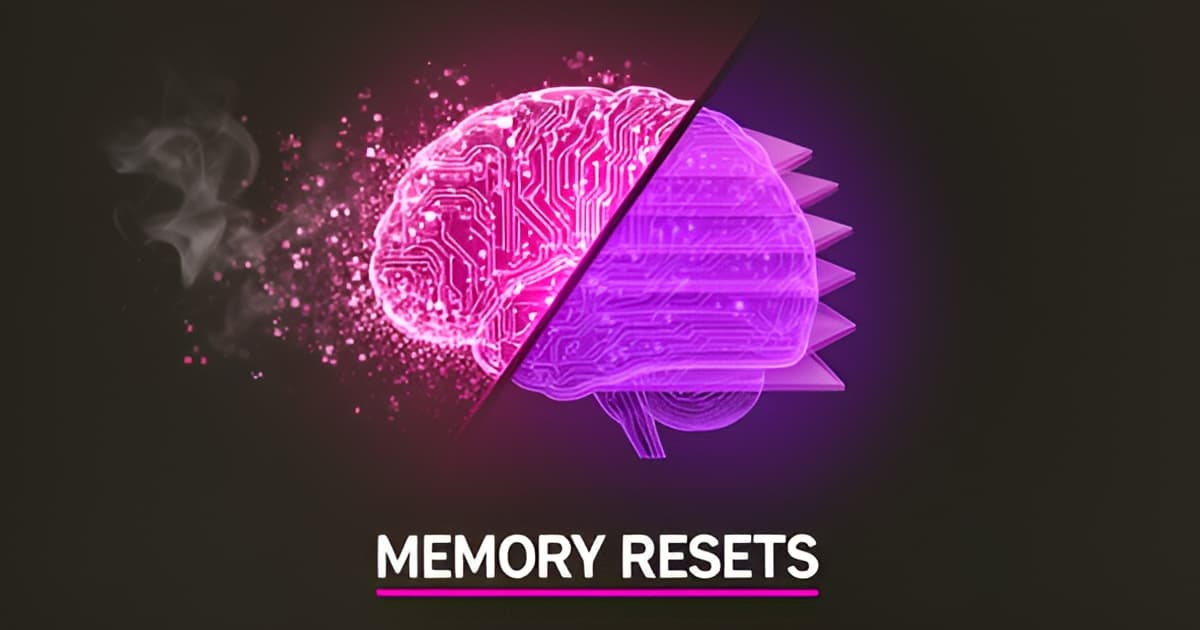
How Becraved handles memory — and what happens when it resets
Key Facts
- AI companion apps surged 700% in usage between 2022 and mid-2025, according to industry research.
- Consumer spending on AI apps passed $1.4B in 2024 and is projected to exceed $2B in 2025, per market research.
- LLMs cannot remember on their own — memory must be engineered as a separate component, IBM's technical overview explains.
- Session-bound AI memory works like RAM: fast and immediate, but wiped when the session ends, technical sources note.
- A kept chat log is not memory — it becomes memory only when lessons are converted into retrievable context, LangChain's team writes.
- Deleting a ChatGPT chat doesn't erase its memories; the memory itself must be deleted, OpenAI documents.
- Without persistent memory, AI agents repeat questions, miss updated facts, and rebuild context every time, a recent study found.
The Challenge of AI Memory Management
The challenge of AI memory management is a pressing concern for users of companion apps, as it directly impacts the quality and continuity of their interactions. When a session ends or an app resets, session-bound memory is wiped, taking with it any information or context gathered during that session. This means that users may have to repeat themselves or re-establish their preferences and interests each time they interact with the app, which can be frustrating and feel like a step backwards.
In contrast, long-term memory allows AI agents to store and recall information across different sessions, making them more personalized and intelligent over time. However, implementing long-term memory requires careful consideration of what information to store, how to update it, and when to retrieve it. Memory tools can help extract relevant facts from interactions and store them beyond the live context, but they must be designed to handle the complexities of human conversation and behavior.
Some key considerations for AI memory management include:
- The distinction between transcript and memory: a kept chat log is not the same as memory, which requires the extraction and storage of relevant information.
- The importance of memory persistence across sessions, which enables AI agents to recall user preferences and context over time.
- The need for robust memory tools that can handle the complexities of human conversation and behavior, including updating and retrieving information in a way that feels natural and intuitive.
According to industry research, AI companion apps have surged in popularity, with a 700% increase in usage between 2022 and mid-2025. As these apps become more integrated into our daily lives, the importance of effective AI memory management will only continue to grow. Unlimited memory on every plan, as offered by FlirtAlly, can provide a more seamless and personalized experience for users, allowing them to build meaningful relationships with their AI companions without the frustration of repeated resets or lost context. With the ability to recall and respond to users' unique characteristics, preferences, and past conversations, AI companions can become more than just a novelty – they can become a true companion.
The Technical Underpinnings of Memory in AI
The technical underpinnings of memory in AI systems are rooted in the distinction between session-bound short-term memory and persistent long-term memory. According to industry research, large language models (LLMs) cannot remember on their own, and memory must be added as an engineered component. This is evident in the way technical sources describe short-term memory as being "like RAM: fast and immediate, but wiped when the session ends."
When a session ends, or older messages are removed from context, the agent can no longer access previously stated preferences, project details, decisions, or status changes, as noted in articles on AI agent memory tools. This limitation underscores the importance of persistent long-term memory, which allows AI agents to store and recall information across different sessions, making them more personalized and intelligent over time.
Some key characteristics of effective memory systems include:
- The ability to extract relevant facts from interactions and store them beyond the live context
- The capacity to update or expire stored information when it changes
- The ability to retrieve the most useful memories for later turns
In the context of AI companion apps, this means that a user's interactions and preferences are retained and used to inform future conversations, creating a more cohesive and engaging experience.
For instance, ChatGPT's memory behavior shows how memories can evolve with user interactions and are not linked to specific conversations. Deleting a chat does not erase its memories; instead, the memory itself must be deleted. This approach highlights the complexity of designing memory systems that balance persistence with the need for forgetting or updating information.
In contrast, some AI companion apps, like FlirtAlly, offer unlimited memory on every plan, including free plans, allowing users to build ongoing relationships with AI companions who remember them and adapt to their preferences over time. This approach underscores the importance of memory persistence in creating a more personalized and engaging user experience.
According to market research, AI companion apps have surged in popularity, with a 700% growth between 2022 and mid-2025, and consumer spending on AI apps is projected to exceed $2B in 2025. As the market continues to evolve, the design of memory systems will play a critical role in shaping the user experience and differentiating between various AI companion apps.
In the case of Becraved, however, its memory system and reset behavior are not publicly documented in the available research sources, making it challenging to compare its memory handling with other AI companion apps. Nonetheless, understanding the technical underpinnings of memory in AI systems provides valuable insights into the complexities of designing personalized and intelligent interactions.
