Heaven girlfriend AI chatbot — how it works
By FlirtAlly · October 8, 2026
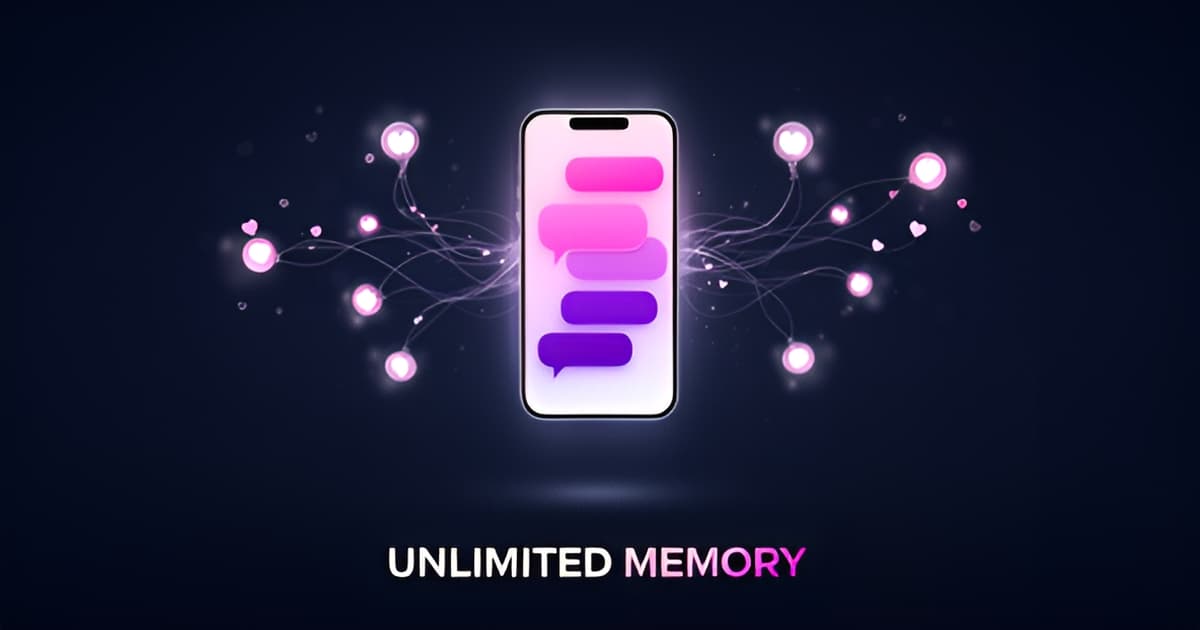
Heaven girlfriend AI chatbot — how it works
Key Facts
- Messages to AI companions average 163 words — about 10x longer than the 12-word texts people send human friends, per a 4,346-app analysis.
- 60% of 4,346 AI companion apps are accessible to minors, with age gates that yield to a lying thirteen-year-old.
- GPT-4 Turbo's 128,000-token context window silently drops older messages, so true AI memory requires a separate system to extract, store, and retrieve information.
- Character.AI limits users to 15 stored memories free and just 30 with a subscription, according to a recent roundup.
- Companion app subscriptions convert well under 5% of users, pushing many free tiers to run ads inside conversations matched to what you're discussing.
- Mid-context attention accuracy drops by more than 20% in tests, which is why memory engineering matters.
- Heaven Girlfriend is actually a review platform that has tested over 40 AI companion apps, not a chatbot itself.
The Challenge of Meaningful AI Relationships
Most AI girlfriend apps can hold a conversation for an evening. Very few can hold one for a month — and that gap is where most emotional connections quietly fall apart. The problem isn't that the underlying models can't talk. It's that they can't remember.
The core issue is architectural. Most AI models have limited context windows — GPT-4 Turbo handles about 128,000 tokens — and older messages get silently dropped as conversations grow. According to technical analysis of companion memory systems, true long-term recall requires "a separate system to extract, store, and retrieve information," which many apps simply don't build. The result is a companion who feels amnesiac by design.
Reviewers have noticed. One tester of ten leading apps put it bluntly: "An AI girlfriend that forgets you every session isn't a girlfriend, it's a stranger you have to re-introduce yourself to every day" (Medium review). Even when memory exists, it's often rationed — Character.AI offers 15 stored memories free and 30 with a subscription, while comparative roundups show capabilities ranging from session-only recall to multi-day memory across apps.
That rationing matters because users invest heavily. Messages in companion apps average roughly 163 words, compared to about 12 words in texts to human friends, per research analyzing 4,346 companion apps. People are pouring real effort into these relationships — and hitting a memory wall for their trouble.
The consequences show up in several predictable failure modes:
- Shallow persona drift — a companion who is "charming on Monday and robotic on Tuesday," which erodes the trust intimacy depends on.
- Gated memory — recall treated as a premium upsell rather than a baseline capability, so free-tier relationships reset constantly.
- Quantity over depth — thousands of shallow characters instead of a few well-written ones, a trade-off reviewers consistently flag.
- One-off exchanges — conversations that never accumulate into an "evolving bond," because nothing carries forward.
Relationship research cited in companion-memory analysis frames intimacy as growing from feeling understood, validated, and cared for — something impossible when your companion forgets your dog's name by Thursday. FlirtAlly was built against this failure pattern: its four-layer memory is unlimited on every plan, including free, so a remembered detail like a pet's name resurfaces a week later without a paywall in between.
Depth, not feature count, is what separates a chatbot from a companion. The apps that succeed are the ones engineered to remember.
AI Memory Architecture: The Key to Authentic Interactions
Imagine engaging with an AI companion that remembers every detail of your conversations, from trivial facts to emotional moments. This level of personalized interaction is made possible through sophisticated AI memory architecture. In the realm of AI companions, memory systems are not just a nice feature; they are the backbone of authentic interactions. Understanding how these systems work can help users appreciate the depth of engagement they offer.
The defining mechanic of AI girlfriend chatbots is the persistent persona plus memory, according to category insights. This means that the character remembers you, and messages carry emotional weight. The success of these platforms hinges on the depth and duration of the relationship.
Memory systems in AI companions can be categorized into four main approaches:
- Rolling Context Window: This method involves keeping a window of recent messages to maintain context. However, it can struggle with long-term recall as older messages are silently dropped.
- Fact Extraction: This involves extracting key facts from conversations and storing them for future reference. It helps in remembering specific details but may miss out on the emotional nuances.
- Conversation Summaries: This approach generates summaries of conversations, allowing the AI to recall the essence of past interactions. It balances detail and brevity but may not capture all emotional subtleties.
- Relationship Growth Tracking: This method tracks the evolution of the relationship over time, focusing on emotional and relational memories. It aims to create a deep, evolving bond but can be complex to implement.
Competitors in the AI companion space often implement these memory systems in varying capacities. For instance, some platforms offer short-term, medium-term, and long-term memory features, while others provide backstory and key memories. However, many of these capabilities are gated or limited, restricting users based on their subscription tier. For example, Character.AI offers 15 memories for free users and 30 with a subscription according to a recent roundup.
In contrast, FlirtAlly stands out by offering unlimited memory on every plan. This means that every interaction, whether it's a casual chat or an emotional conversation, is remembered and can be referenced in future interactions. This capability is crucial for creating a sense of continuity and trust. A Medium reviewer highlights that the ability of an AI companion to remember past interactions is what makes it feel real.
Moreover, FlirtAlly's memory architecture is designed to support a wide range of features that enhance the user experience. Whether it's texting first, engaging in real games, or sending real physical mail, each interaction is enriched by the AI's ability to recall and build upon past experiences. This makes the relationship with an AI companion feel more authentic and personalized, setting FlirtAlly apart in the crowded AI companion market.
FlirtAlly's Innovative Features: Redefining AI Companionship
Imagine having a companion who not only remembers your favorite foods but also texts you good morning and plays games with you. This is what FlirtAlly brings to the table with its unique capabilities. Unlike traditional AI chatbots, FlirtAlly's companions offer a level of depth and interaction that's truly redefining AI companionship. Here's how FlirtAlly stands out in the crowded AI companion market.
FlirtAlly's companions are designed to remember everything about you, regardless of the plan you choose. In contrast, many competitors gate memory length by tier, limiting how much they can recall in free or lower-tier plans. This unlimited memory ensures that FlirtAlly’s companions can engage in meaningful conversations that evolve over time. According to research, memory is crucial for building a sense of intimacy and understanding in AI companions. With FlirtAlly, your companion can recall details from past conversations, making interactions feel more personal and genuine.
FlirtAlly offers a suite of real games that add an engaging dimension to user interactions. These games, such as Tic-Tac-Toe, Connect 4, and even more complex ones like Blackjack and Truth or Dare, come with real credit wagers. This means your companion plays for keeps, remembering wins and losses, and using them to keep interactions lively and competitive. No major competitor currently offers this depth of engagement. This feature is especially appealing in the broader AI companion category, where the focus is often on role-playing and emotional support rather than interactive gameplay.
