Character AI pin memory: how it actually works
By FlirtAlly · October 7, 2026
Character AI pin memory: how it actually works
Key Facts
- Character AI allows 5 pinned messages per chat official documentation.
- c.ai+ subscribers get 'twice as many pins' but the new limit is unpublished official sources.
- Pinning more than 5-7 short messages causes 'pin amnesia' due to shared token limits independent analysis.
- Character AI's conversation memory holds ~3,000–4,000 tokens before truncation technical analysis.
- In a test, Character AI recalled 0 of 3 planted details (e.g., dog's name) across sessions independent analysis.
- FlirtAlly offers unlimited memory on every plan, including free product brief.
- 73.8% of users found Character AI's Pinned Memories help article helpful official support data.
The Pin Memory Problem
Imagine engaging with an AI companion that forgets key details of your previous conversations, leading to repetitive or disjointed interactions. This scenario is all too common with Character AI's pin memory system, which relies heavily on manual user input. Users must explicitly pin messages into what is termed "Story Memory," a process that does not replicate the natural, autonomous recall that users might expect from a persistent memory system like FlirtAlly’s.
Character AI's pin memory is fundamentally different from persistent memory systems. Pins are user-written notes that the AI reads, rather than the AI autonomously recalling information. This manual and explicit nature means users must actively manage the information they want the AI to remember, which can be cumbersome and unreliable. In practice, this leads to a series of disconnected conversations.
According to Character AI's official documentation, users can pin up to 5 messages per chat. However, this limit is officially outdated and contradicted by varying sources. Additionally, c.ai+ subscribers receive “twice as many pins,” though the new base number is unpublished. This inconsistency highlights the limitations and potential confusion surrounding Character AI’s memory system.
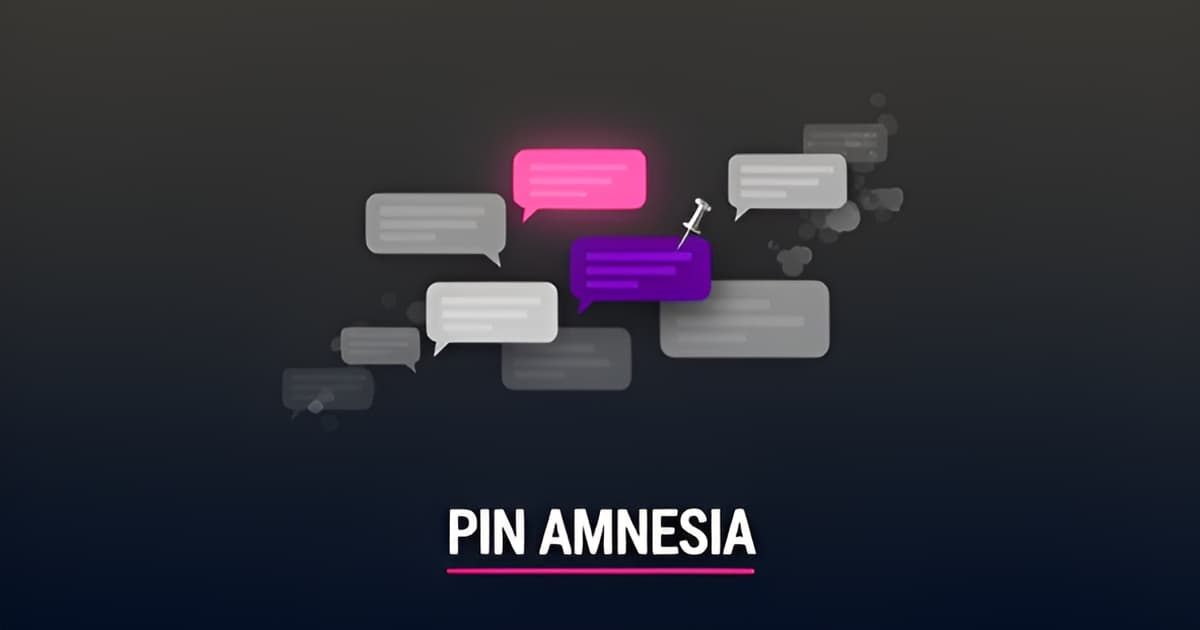
Character AI’s memory system operates under several hard constraints. For instance, pins compete with chat history for the same limited prompt space, leading to what users have termed "pin amnesia." This occurs when the AI becomes overly fixated on pinned content, causing it to derail mid-conversation. This phenomenon is not just a glitch but a structural issue inherent to the platform's design. This can result in a frustrating user experience, as the AI may forget important details or struggle to integrate new information seamlessly.
Pinned content is protected from pruning, but everything else is not. According to official sources, anything pinned remains in the conversation history, but the AI's capability to recall this information is limited by the shared token pool. This means that as more information is added, older content may be forgotten, leading to a fragmented memory system.
In contrast, platforms like FlirtAlly offer a more robust and organic memory system. FlirtAlly’s companions have four layers of memory: facts, episodic, emotional, and rolling summary. This multi-layered approach ensures that details are captured and recalled naturally, providing a more coherent and engaging user experience. Additionally, FlirtAlly's semantic recall allows companions to remember and reference past conversations even when phrased differently, enhancing the sense of continuity and personal connection.
Character AI’s system also falls short in emotional recall, a critical aspect of building a meaningful connection. As highlighted by a recent analysis, emotional context often falls through the cracks, even when basic facts are remembered. FlirtAlly’s emotional memory layer addresses this gap, allowing companions to remember and respond to emotional cues, fostering a deeper, more authentic bond.
To summarize, the limitations of Character AI's pin memory system highlight the importance of a more sophisticated and user-friendly memory architecture. Character AI's reliance on manual pinning and limited prompt space leads to a disjointed and unreliable memory system. FlirtAlly’s four-layer memory system, with its emphasis on organic recall and emotional context, provides a more seamless and engaging experience. Experience the difference for yourself by joining the waitlist.
Understanding Character AI's Memory Mechanics
Character AI's pin memory sounds simple: long-press a message, tap "Pin," and it locks into Story Memory, protected from the platform's background tidying. But the mechanics underneath reveal why so many users report their bots forgetting things they pinned specifically so they wouldn't be forgotten.
The core constraint is that pins don't get their own storage. According to technical analysis of the platform, pins, Persona, and Character Definition all compete with chat history for the same limited prompt space — estimated at roughly 3,000–4,000 tokens of conversation memory. Over-pin, and the bot starts clinging obsessively to pinned content or derailing mid-conversation to reference old pins. Users call this "pin amnesia," and one independent analysis argues it's not a rare glitch but a predictable outcome of how the platform was built.
Forgetting itself doesn't happen gradually. Character AI's truncation system removes conversation blocks in discrete jumps rather than a smooth fade, which is why a bot can seem fine one message and amnesiac the next. Pinned messages are protected — Character AI states that anything in Story Memory "stays put no matter how full the bar gets" — but everything unpinned is fair game for background memory tidying.
The numbers around pinning are also murkier than they should be:
- The only official figure is 5 pins per chat, from a Help Centre article dated March 2024 and never updated since.
- c.ai+ subscribers get "twice as many pins" — but the new base number remains unpublished.
- A widely circulated "15 pins" claim in third-party articles is unsourced; some even hyperlink their figure to the official page that says 5.
- Practical testing suggests the system degrades after just 5–7 short pins regardless of the technical maximum.
