AI girlfriend art: what to expect
By FlirtAlly · October 7, 2026
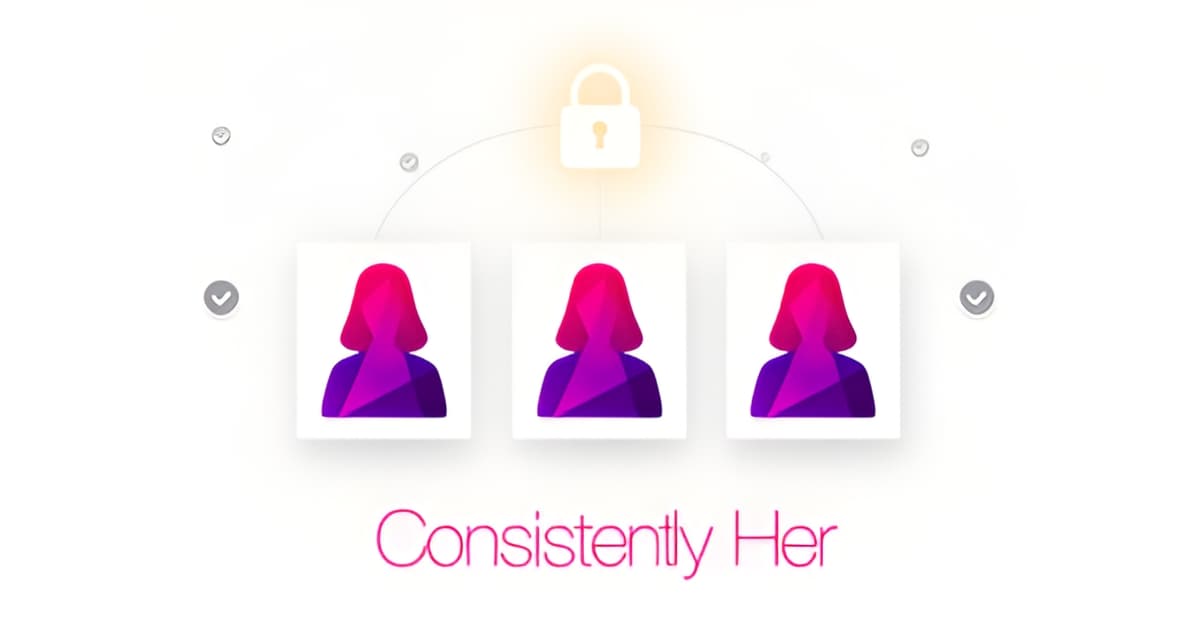
AI girlfriend art: what to expect
Key Facts
- Midjourney leads generative image tools with a 26.8% market share, followed closely by DALL-E at 24.35% per market data.
- The global AI image market is projected to reach $0.9 billion by 2030 — a 254% jump from 2022's $0.26 billion.
- MIT's HART model matches or exceeds state-of-the-art image quality while running roughly nine times faster.
- Illustrator Hollie Mengert said AI copies of her style "lacked emotion" and weren't something she'd actually draw.
- Nearly half of surveyed artists — 45.7% — find text-to-image technology "very useful" in their creative process.
- A Stanford journalism fellow argues authenticating images at creation is the clearest path to public trust in synthetic imagery.
- 76% of people believe AI-generated content should not be considered art.
The Consistency Problem: Why Most AI Girlfriend Images Don't Feel Like Her
The first selfie looks perfect. The second one looks like her cousin. The third looks like a stranger wearing her clothes — and that's the moment the illusion collapses.
This is the consistency problem, and it's the single biggest gap between what generic AI art tools deliver and what companion art actually requires. Midjourney leads the generative image market with a 26.8% share and DALL-E follows at 24.35%, according to market data on AI art tools — but neither platform is built to preserve a character's identity across renders. They're built to make beautiful images, not the same person twice.
The distinction matters more than it sounds. A companion relationship is cumulative: you remember her face from the first conversation, and every photo after that either confirms or contradicts that memory. When each render produces a different-looking woman, the tool isn't generating her — it's generating a series of unrelated women who happen to match a text prompt. The relationship breaks at the pixel level.
The research on AI art limitations points in the same direction. When illustrator Hollie Mengert reviewed AI outputs mimicking her style, she said they "lacked emotion and weren't something I would actually draw" — a reminder that technical fidelity and felt authenticity are different problems. For companion art, authenticity means something even more specific: recognizability. It's not whether the image is beautiful; it's whether it's her.
What "always the same person" actually requires:
- A canonical face — a locked reference identity that every render is checked against, not just a description in a prompt.
- Identity verification at generation time, so a selfie, a video message, and a couple photo all resolve to one person.
- Consistency across contexts — same face at the beach, at dinner, in a video call — not just same face in similar lighting.
- Memory of visual history, so her wardrobe and appearance evolve the way a real person's do, without becoming someone new.
The underlying technology is improving fast. MIT researchers recently developed HART, a model that matches or exceeds state-of-the-art image quality roughly nine times faster — and efficiency at that level makes high-volume, identity-checked companion imagery practical rather than aspirational.
This is the benchmark FlirtAlly is built around: every companion has a locked face, and every selfie, video, and couple photo is identity-checked against it before it reaches you. Speed and beauty are table stakes. The real test of companion art is whether the woman in today's photo is the woman you talked to yesterday.
What Good AI Girlfriend Art Actually Looks Like: Selfies, Couple Photos, and Face Lock
The difference between a convincing AI girlfriend photo and an uncanny one usually comes down to one question: is this still the same person? Here's what realistic quality looks like across the image types you'll encounter, and how the best platforms solve the drift problem.
Casual selfies are the bread and butter of companion imagery. The technology has matured fast: MIT researchers report that HART now generates images matching or exceeding state-of-the-art diffusion model quality while running roughly 9x faster. As co-lead author Haotian Tang put it, "an efficient image-generation model would unlock a lot of possibilities" — and casual, on-demand companion selfies are exactly one of those possibilities.
Lip-synced video raises the bar further. A still photo can be nearly perfect; video exposes inconsistencies in movement, voice alignment, and facial structure. Expect the same identity rules to apply: the face that opens the video should be the face that closes it.
Couple photos — renders pairing your uploaded face with your companion's — are the most technically demanding, because two identities must stay stable in a single frame.
What separates good output from mediocre across all three types:
- A canonical reference face that every render is checked against, so day 30 looks like day 1
- Consistent wardrobe and setting details, not just facial features
- Emotional expression that feels intentional rather than generic
That last point matters more than it might seem. Illustrator Hollie Mengert, after seeing AI outputs mimic her style, observed that they "lacked emotion" and weren't something she "would actually draw." That critique — technically competent but emotionally hollow — is the bar any companion imagery must beat. A selfie that looks like your companion but feels like a stock render fails the test.
This is why identity-checking matters so much. FlirtAlly locks a canonical face for each of its companions — official cast members like Mia or Yuki, or ones members design in the creator wizard — and every render, from a 3-credit selfie to a couple photo rendered with your uploaded face, is identity-checked against it. The drift problem isn't patched; it's prevented at the source.
