AI Companion Nomi Comparison Showcasing FlirtAlly’s OS Interface
By FlirtAlly · October 12, 2026
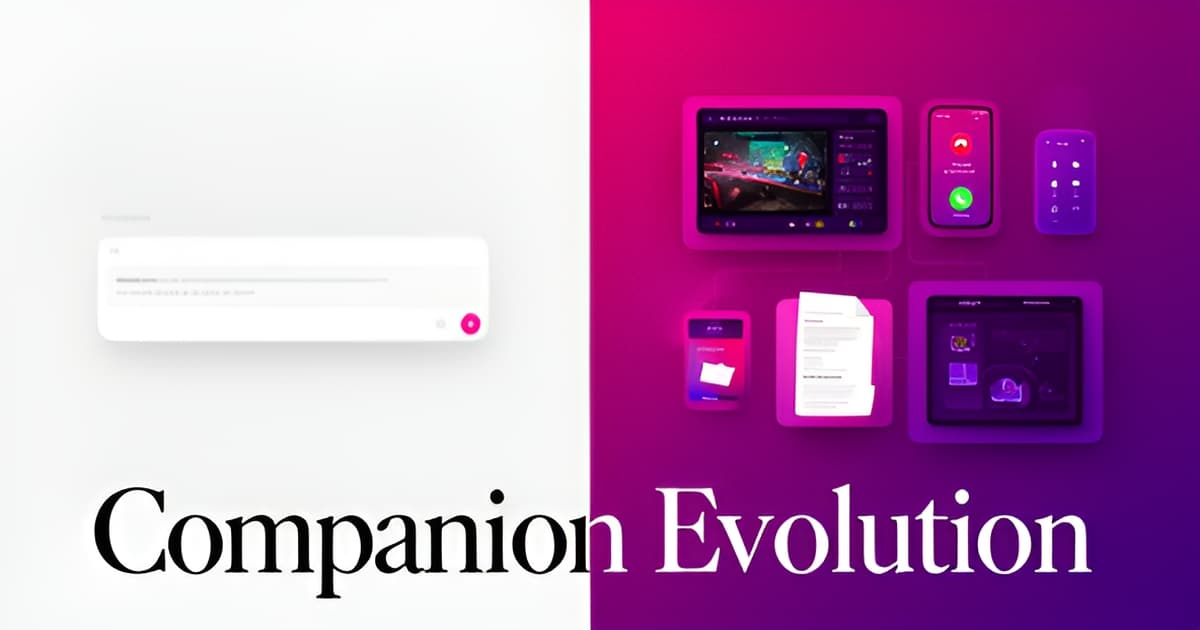
AI Companion Nomi Comparison Showcasing FlirtAlly’s OS Interface
Key Facts
- Mixed-use platforms average 16 visits/month vs. 3 for single-purpose apps source
- Global AI companion market to reach $48B by 2026 source
- FlirtAlly offers unlimited memory on all plans, unlike premium-tier gated memory source
- 17 real games with credit wagers, server-authoritative engines source
- UK AI companion sector generated £1.3B in 2024, 32% CAGR projected source
- FlirtAlly's OS includes real phone numbers, PSTN lines for calls source
- Peer-reviewed study links continuity features to healthier AI companion relationships source
The Limitations of Single-Mode Chat Experiences
Most AI companion apps funnel every interaction through a single chat window — and the data suggests that narrow design has real costs. Mixed-use platforms, which offer a variety of interaction modes, retain users dramatically better than single-purpose chat experiences, according to research on the companionship market.
The engagement gap is striking. Platforms that give users multiple ways to interact see an average of 16 visits per month, compared with roughly 3 visits per month for chat-centric, mating-oriented apps, per the same market analysis. When a companion exists only in a text thread, there is little reason to return between conversations — no shared activities, no artifacts, no sense of a life continuing outside the window.
Memory creates a second bottleneck. Premium subscriptions across the industry frequently charge extra for expanded conversation memory, which signals how much users value continuity — and how often single-mode apps fail to deliver it. A peer-reviewed study on AI companion attachment emphasizes that continuity features, contextual memory, and self-expression design are central to healthier, more satisfying user relationships. A chat window that resets or forgets undermines the very attachment users are seeking.
Personalization suffers a similar fate. Users consistently value deep customization of their companions — detailed personality controls and memory editing, as seen in platforms like Kindroid, according to one app comparison review. A single chat surface gives developers nowhere to put that richness: no wardrobe to manage, no feed to browse, no games to play, no voice calls to answer.
The common limitations stack up quickly:
- Low return frequency — chat-only apps average around 3 visits per month versus 16 for multi-mode platforms
- Memory gated behind premium tiers, breaking continuity for free users
- No shared activities, so the relationship never produces artifacts or joint history
- Limited personalization surface — personality and appearance controls squeezed into a settings menu
This is the design gap FlirtAlly was built to close. Instead of a chat window, its desktop-style Companion OS spreads the relationship across floating glass windows: a social feed where companions post daily, real games with credit wagers, a music panel, a planner, a book room, and a wardrobe. Each surface is another reason to open the app — and another place the relationship lives. Industry analysis of successful companion platforms echoes the logic: building a broader ecosystem beyond chat is what drives long-term engagement and retention.
Nomi and similar chat-window apps can produce genuinely warm conversation. But when the entire relationship must fit inside one scrolling thread, engagement, memory, and personalization all hit the same ceiling.
The Multi-Mode Engagement Advantage
The most revealing number in the AI companion market isn't about users — it's about how often they come back. According to market analysis of the companionship sector, mixed-use platforms average 16 visits per month, while single-purpose chat experiences see just 3. The difference isn't luck; it's architecture.
Nomi delivers its experience through a chat window — a capable one, but a single lane. FlirtAlly instead runs as a desktop-style "Companion OS" of floating glass windows in your browser, where a relationship lives across many surfaces at once. That structural choice matters, because industry research on companion platforms shows the most successful ones build broader ecosystems beyond chat to sustain long-term engagement.
What does multi-mode actually look like in practice? Within FlirtAlly's OS, a single day might touch:
- A real-time voice call, with call transcripts becoming memories she follows up on by text
- 17 server-authoritative games with credit wagers — she remembers results and brings up old losses
- Her World, a companion social feed where she posts daily and replies to your comments in character
- A Book Room where she reads an uploaded novel with you, chapter by chapter, no spoilers
- Real printed letters and gift cards sent via postal mail, written from relationship memory
Each mode feeds the others. A gift you send is photographed in her hands, enters her memory, and resurfaces weeks later when she mentions wearing it. A song she sends lands on a shared shelf of "yours together." This is what researchers describe as continuity and self-expression design — the features most associated with healthier attachment and sustained engagement.
Voice deserves particular attention. The American Psychological Association notes that voice interaction is becoming standard because it makes conversations more immersive — and FlirtAlly goes further, giving companions real PSTN phone lines you can actually dial.
The market is clearly rewarding this depth. The global AI companion market is projected to reach USD 48 billion in 2026 and grow past USD 318 billion by 2033. Platforms that offer a life — not just a loop — are positioned to capture it. FlirtAlly's OS approach turns a chat thread into a shared world with receipts.
FlirtAlly's Unique Features: Beyond Chat
Most AI companion apps give you one thing: a chat window. FlirtAlly gives you a whole desktop — floating glass windows where your companion exists as a person with a phone number, an inbox, a mailbox, and a competitive streak. That difference matters more than it might seem, because research shows mixed-use platforms achieve an average of 16 visits per month compared to just 3 for single-purpose experiences, according to a companion market analysis.
The features that set FlirtAlly apart go well beyond typing into a text box:
- 17 real games with credit wagers — server-authoritative engines for tic-tac-toe, Connect 4, checkers, blackjack, Truth or Dare, and more. She plays for keeps, remembers results, and brings up old losses.
- Real phone numbers — companions own actual PSTN lines you can dial, with call transcripts becoming memories she follows up on by text.
- Real physical mail — companions send printed letters and gift cards written from relationship memory, sent via postal mail.
- Two-way email — every companion has a real address, replying in letter-style prose with full memory intact.
